|
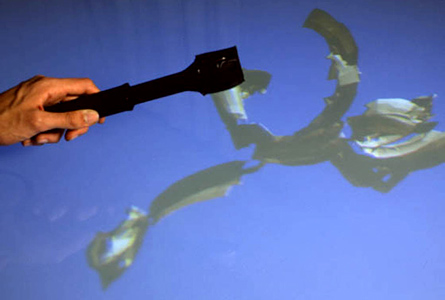
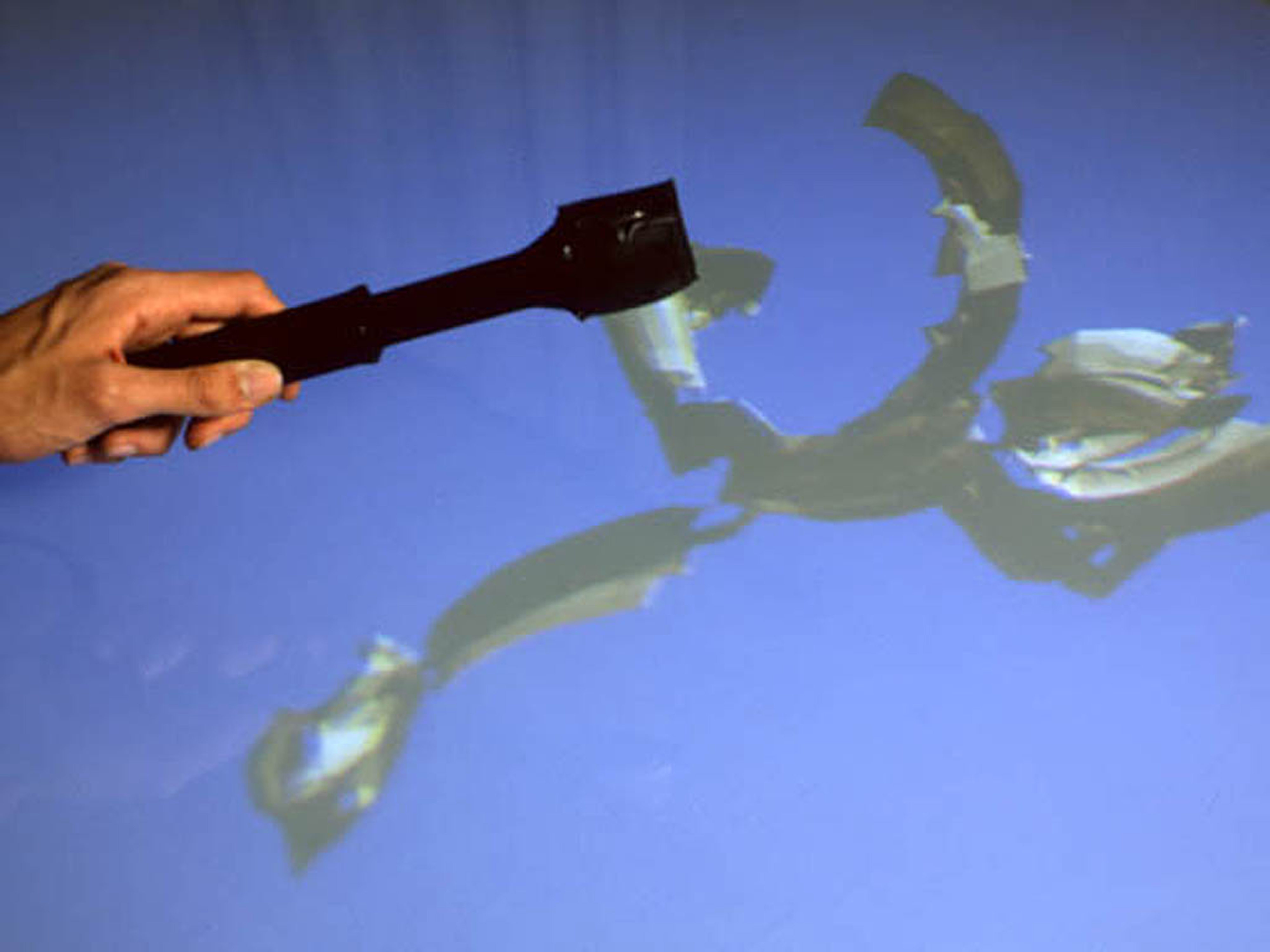
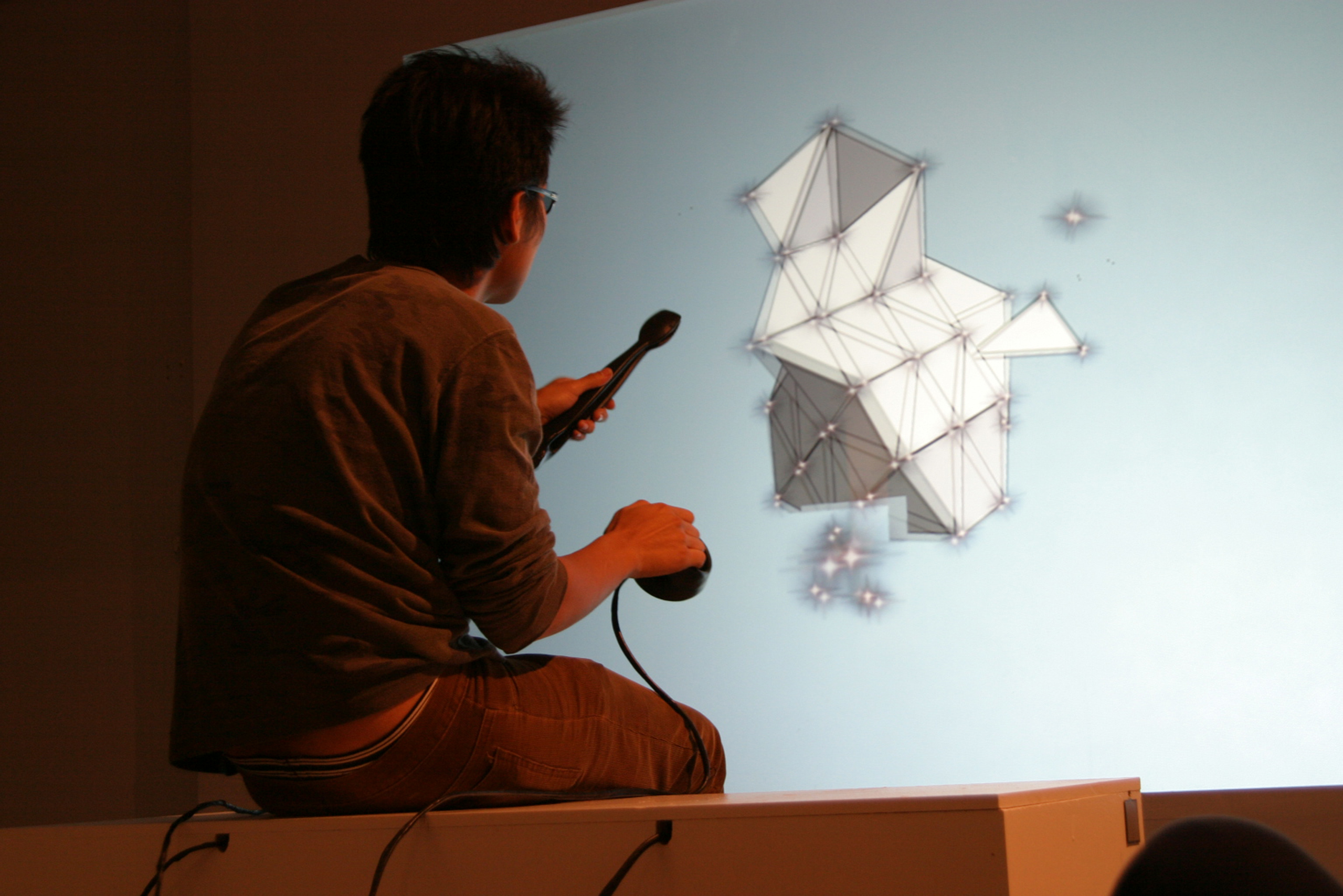
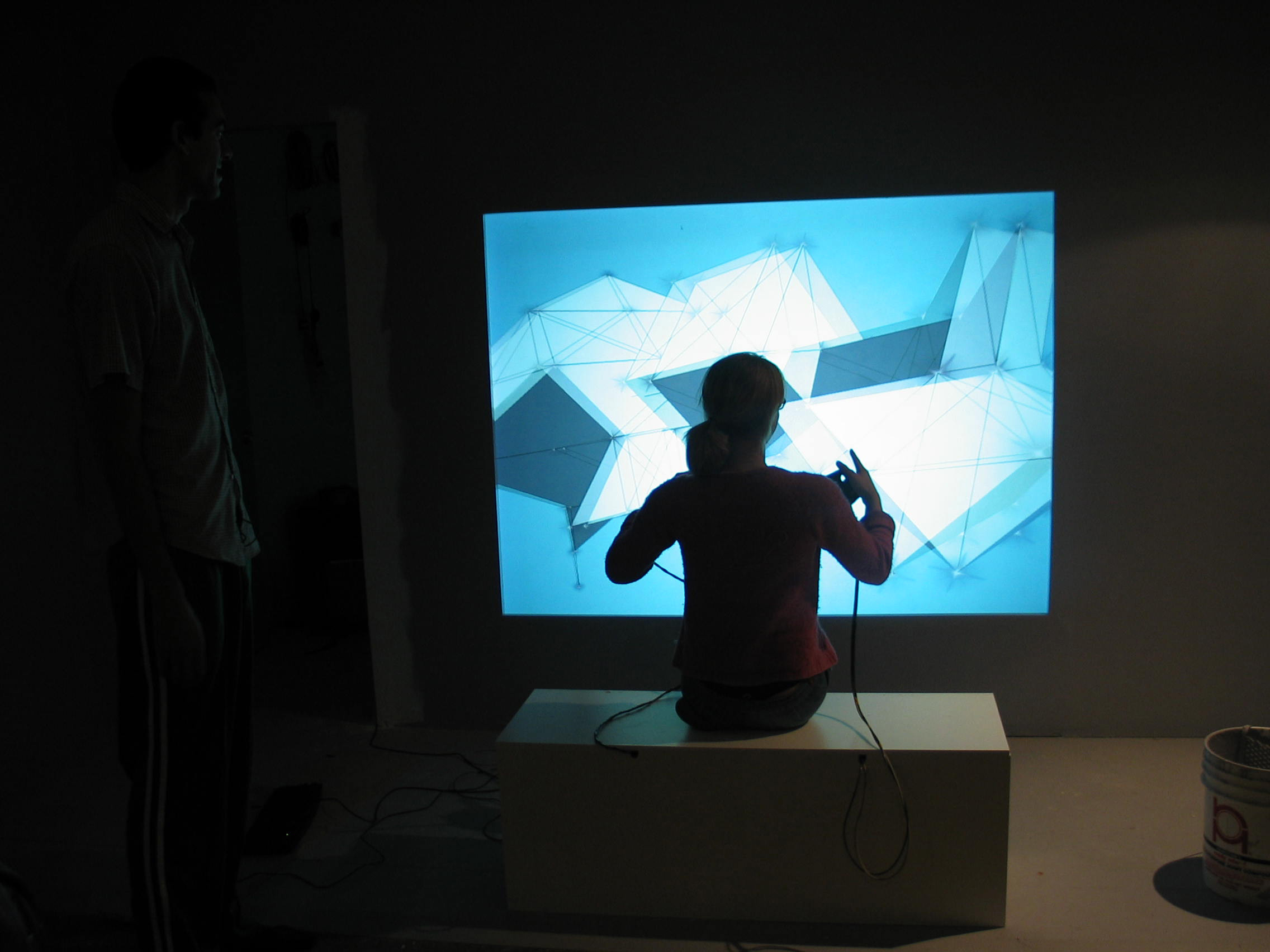
THE CRYSTAL METHODHolding a specially designed tool and wearing 3-D glasses, visitors draw in space, causing crystal particles to appear and lock together in a lattice formation. Visitors perceive the created shapes floating in space and can grab, rotate, and shake them with special sensed tongs. This installation reveals crystal structures found at the nanoscale. This three-dimensional interactive work is based on interface research conducted by Steven Schkolne with Peter Schroeder at the California Institute of Technology (Caltech). The technology of The Crystal Method is potentially applicable to research in nanoscience. Many Thanks to the California Institute of Technology, DesignworksUSA, and the National Science Foundation for making this project possible and Rev. Badri Bajracharya, 'Living National Treasure' of Nepal. FEELING IS SEEINGSTEVEN SCHKOLNE, The Crystal Method, 2003: This installation demonstrates the concept of sense through touch in molecular manipulation using the atomic force micro-scope (AFM). Based on tactility, the AFM allows molecules and atoms to be explored through their softness and hardness, and in some instances through unraveling molecular chains. As the microscope probes, scientists use the recorded data to create visual images of the molecular surfaces. In this installation, visitors can experience both the visual and the tactile aspects of the instrument through a unique interface that allows them to explore -to the limits of the technologymagnification as well as molecular manipulation. Through a tactile interface, the visitor feels resistance and vibrations and becomes immersed in this ex-perience of the nanoworld. |
 |
|